Kling 4.0 Launches Globally With 30-Second AI Video
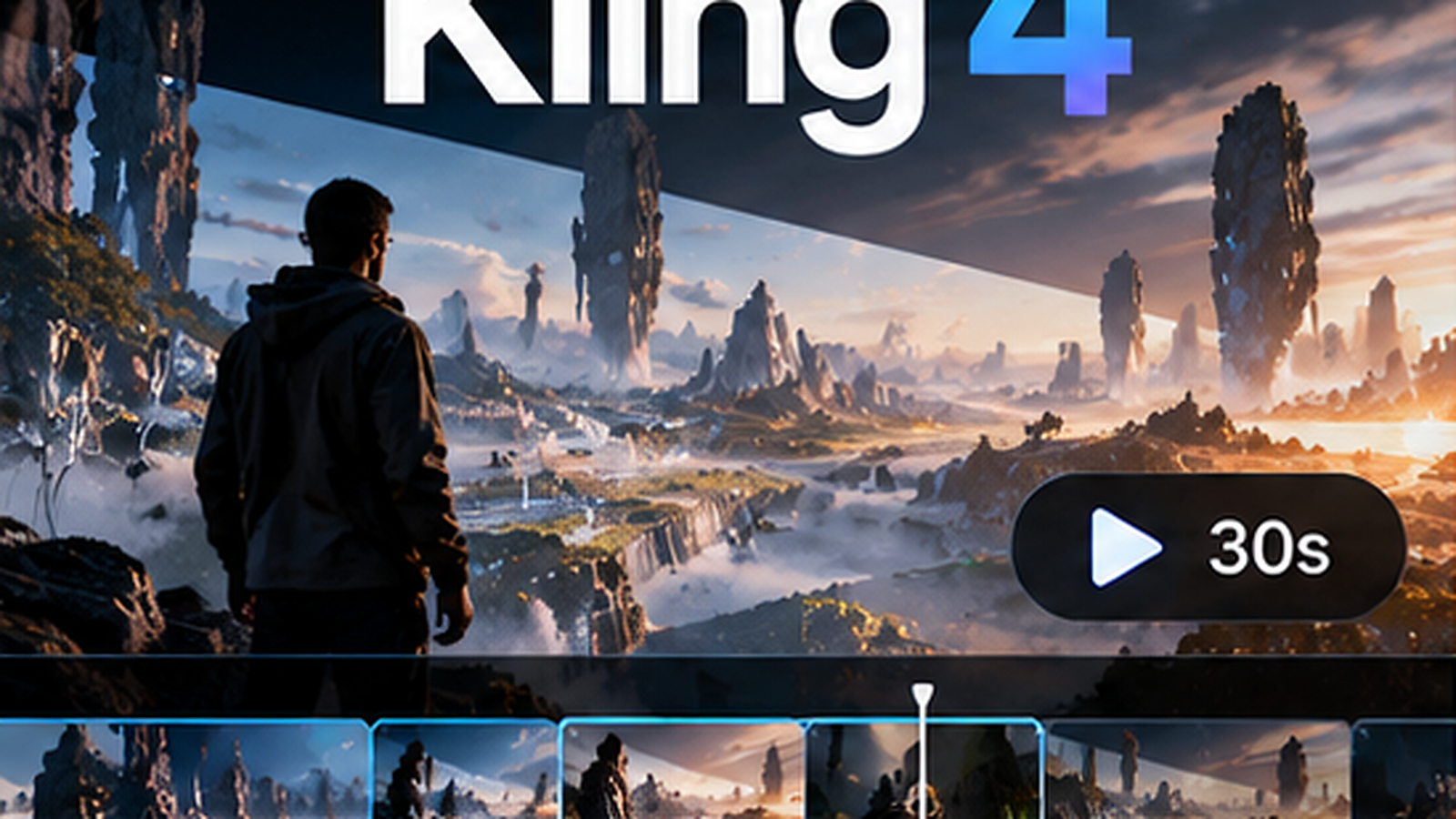
Kling AI announced the global availability of Kling 4.0 on October 16, 2026. The new video-generation model emphasizes longer continuous shots, more stable movement and finer creative direction through multiple reference assets and keyframes. For filmmakers and commercial creators, the interesting part is not merely sharper output: it is the attempt to make AI video behave more like a directed production workflow.
The company says Kling 4.0 is now available through its own website, while enterprise and developer API access is planned to follow. Several headline capabilities, including 10-bit HDR delivery, are described as coming soon rather than universally available on launch day. That distinction matters when planning paid client work.
Native 30-second clips reduce the number of joins
Kling 4.0 supports native generations from short clips up to 30 seconds. A longer continuous shot can be useful for a product reveal, a camera move through a room or a character performing one connected action. Short AI clips often require stitching together several outputs, and the joins can expose inconsistencies in faces, lighting or camera direction.
Thirty seconds is not the same as a finished commercial. A useful result still depends on shot planning, selecting the best take and conventional editing. But the longer generation window gives directors more room to build a beat with a beginning, middle and end before cutting to the next scene.
Ten keyframes give creators more explicit direction
The model accepts up to 10 keyframe inputs, which Kling describes as a way to guide specific visual moments throughout a clip. Instead of relying on one start frame and a long prompt, creators can specify important changes in composition, movement and scene progression. This is especially relevant when a brand needs a product to remain visible or a camera move to land on a precise reveal.
A practical test is to storyboard three or four visual beats first, then add keyframes only where the action needs tighter control. Too many constraints can make an AI workflow harder to iterate, so keyframes should solve a visible problem rather than be added automatically.
Fifteen references aim to improve consistency
Kling 4.0 supports up to 15 multimodal references, including images and video. The goal is to preserve character appearance, visual style, locations and actions across generations. For a campaign, that could mean keeping the same product packaging, wardrobe and environment across multiple shots.
Reference consistency is still a claim that needs project-level testing. Logos, small printed text, hands and complex interactions remain useful stress tests for any video model. Creators should compare frames across the whole sequence instead of judging a single impressive still.
Camera movement and scene direction get attention
The launch emphasizes tracking, orbiting, push-ins, pull-outs and other complex camera movements. Kling says its model is more stable when the camera and subject move at the same time. That is valuable because convincing motion is often what separates a usable shot from an attractive but obviously synthetic clip.
For evaluation, start with a simple prompt that describes one camera move and one subject action. If the result holds together, introduce secondary motion or additional characters. This staged approach makes it easier to identify which instruction causes instability.
Do not confuse planned HDR with current availability
Kling says support for 10-bit HDR output at 4K and 1080p and a 21:9 ultrawide format is coming. Its announcement also discusses video extension up to two minutes. Teams should check the actual creation interface and account entitlements before promising any of these delivery formats to clients.
A launch presentation can describe both shipping features and roadmap features in one place. The safest production checklist separates available now, limited access and coming soon. That protects budgets and deadlines.
Adobe Firefly integration could expand distribution
Adobe has said Kling 4.0 and Kling 4.0 Flash are expected to join the model choices in Firefly. This could matter to creators who want to compare outputs inside a broader editing environment instead of maintaining separate workflows for every model. Availability and credit costs may differ by platform.
How to test Kling 4.0 on a real brief
Build a three-shot test around a real product or story. Keep the subject and references fixed, request a simple establishing move, then a close-up and a transition shot. Track how many generations are needed, whether keyframes help, and whether the best clips survive a normal edit with color grading and captions.
The key performance measure is not a single beautiful generation. It is usable footage per credit, consistency across a sequence and how much manual repair is needed before delivery. Kling 4.0 is promising because it focuses on those production bottlenecks, but its value will depend on repeatable results.
Sources and further reading
Kling AI global launch announcement, October 16, 2026
Official Kling 4.0 feature overview
Official Kling 4.0 model release page
Explore more creative software stories on Nejma
GOT ANY QUESTIONS LEFT?
Kling AI announced global availability on October 16, 2026, following an early-access phase.
The model supports native video generation of up to 30 seconds per clip.
Kling says creators can use up to 15 multimodal reference assets and up to 10 keyframes.
Kling describes 10-bit HDR output as coming soon. Confirm availability inside your account before promising it in a client deliverable.