Surface Laptop Ultra Targets AI Creators
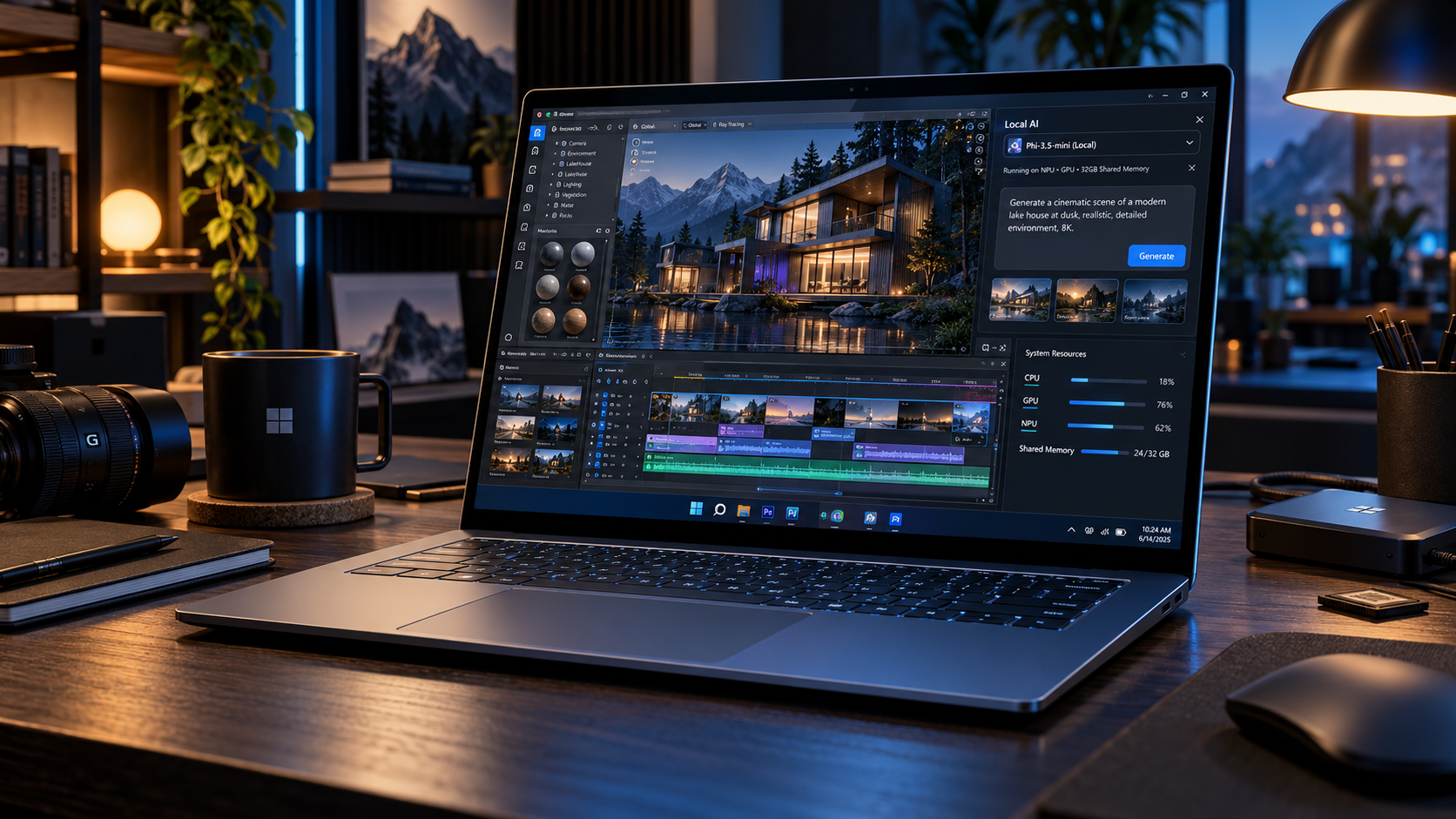
Microsoft opened pre-orders for Surface Laptop Ultra on October 7, 2026, pitching a new kind of Windows laptop for creators who combine 3D, video, coding and local AI. The device is built around NVIDIA RTX Spark, with configurations offering up to 128GB of unified memory shared between the CPU and GPU.
The attention-grabbing claim is not simply faster rendering. Microsoft says the laptop can run AI models exceeding 120 billion parameters locally, with up to one petaflop of theoretical AI performance. For artists and studios, the bigger question is whether this architecture makes demanding mixed workflows more practical away from a desktop workstation.
Why unified memory matters for creative workloads
Traditional systems often split memory between the processor and a dedicated graphics card. Surface Laptop Ultra uses up to 128GB of unified memory, allowing CPU and GPU workloads to share a larger pool.
That could help with large 3D scenes, heavy video projects and AI models that do not fit into the VRAM of typical consumer laptops. However, Microsoft notes that the GPU-addressable amount depends on configuration and workload, so 128GB should not be interpreted as 128GB of unrestricted graphics memory.
Microsoft is targeting creators, not only developers
The company describes workflows that move between modeling, visual effects, editing and AI tools. Its 15-inch PixelSense Ultra touchscreen, expanded port selection, SD card reader and HDMI connection are all aimed at practical production needs.
A built-in card reader and multiple external-display options matter in everyday studio work, but a high-end screen and powerful hardware do not guarantee every creative application performs equally well. Editors should verify plug-ins, codecs and hardware acceleration for their own projects.
Local AI may change creative economics
Running supported models on a local machine can reduce dependence on metered cloud services for repeated experiments. It can also keep some prompts and source material on-device, depending on the software and workflow.
Local inference still has costs: hardware purchase, electricity, model setup and maintenance. Cloud services may remain more sensible for occasional or very large jobs. A hybrid workflow can combine the strengths of both.
Sustained performance is the real test
Microsoft says a redesigned thermal system provides up to 2.5 times the thermal power capacity of its current Surface Laptops, while the chassis remains under 18mm thick and 4.5 pounds.
Those are manufacturer claims, not independent performance results. Rendering a long sequence, generating multiple clips or compiling code for an extended period is a better test than a short demo. Thermal throttling, battery life and fan noise should all be part of an evaluation.
Price and availability set a high bar
Surface Laptop Ultra starts at $2,599 in the United States, with availability beginning October 16, according to Microsoft. A companion Surface RTX Spark Dev Box starts at $5,999 and is expected to ship in November.
At that price, the laptop competes with established professional machines. Buyers should compare real workloads and total configuration costs, not only theoretical AI throughput or maximum memory figures.
Windows on Arm compatibility needs attention
The device uses an NVIDIA Grace CPU and Windows on Arm. Microsoft emphasizes CUDA and its broader Windows AI stack, but individual desktop applications, drivers and third-party plug-ins can have different compatibility and optimization paths.
Before ordering, creators should check their editing software, 3D renderers, capture devices and essential plug-ins. A fast machine is a poor investment if one critical application in the pipeline cannot run reliably.
What studios should watch next
Independent reviews after the October 16 availability date should clarify how the laptop performs in Blender, DaVinci Resolve, Adobe apps and local generation tools. Memory-intensive scenes and long renders will be especially revealing.
The wider industry implication is clear even if this specific device is not right for every creator: local AI is becoming a first-class design requirement for professional hardware rather than a secondary marketing feature.
Sources and further reading
Microsoft official Surface announcement (October 7, 2026)
Independent creative-industry coverage (October 7, 2026)
Explore more creative technology coverage on Nejma
GOT ANY QUESTIONS LEFT?
Microsoft says availability begins October 16, 2026.
Microsoft lists a starting US price of $2,599, with pricing varying by configuration and region.
It can have up to 128GB of unified system memory shared by CPU and GPU; the amount addressable by the GPU varies by configuration and workload.
Microsoft says the platform supports models exceeding 120 billion parameters locally, subject to model, configuration and software requirements.





