How a Small Team Used Resolve for Long-Form VFX
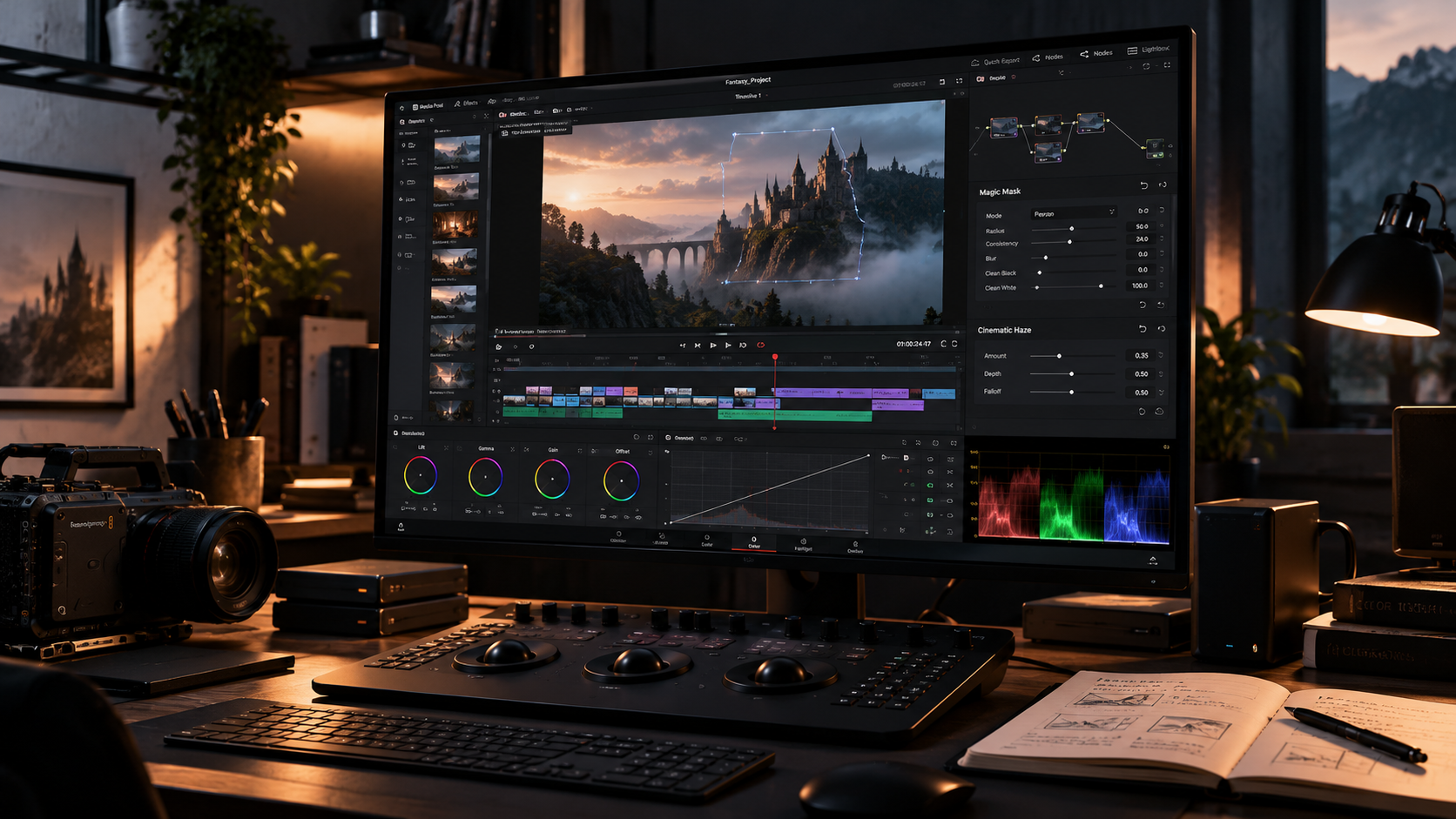
Blackmagic Design has published a production case study on The Exorcism of Nixie, a long-form fantasy project from Deerstalker Pictures. The team used Blackmagic cameras and DaVinci Resolve to handle a production that included a large amount of effects work without the resources of a major studio.
The case is useful because it shows what integrated creative software looks like under real constraints. The production needed to move quickly, solve problems that could not be fixed on set, and keep a small VFX team from being overwhelmed.
The project pushed beyond short-form production
Deerstalker Pictures had already produced many episodes of its fantasy comedy series, but this project moved into two longer narrative installments. Longer-form work changes the production problem because continuity, asset management and post-production workload all grow.
For a small team, the challenge is not simply making one impressive shot. It is maintaining quality across an entire project while still meeting schedule and budget limits.
Resolve became part of the problem-solving process
According to Blackmagic, DaVinci Resolve Studio was used primarily for color correction, but several non-generative AI tools also helped the VFX workload. Magic Mask and Cinematic Haze were called out as especially useful.
AI in production does not always mean generating new imagery. Tools that isolate subjects or reproduce environmental effects can save substantial manual work while keeping the original footage at the center.
Cinematic Haze solved an on-set limitation
The production described a situation where a smoke machine could not be used because of building restrictions. Cinematic Haze gave the team another way to create the atmosphere during post-production.
This is a good example of why post tools matter to production planning. A flexible finishing system can provide insurance when a location or safety rule prevents the ideal setup on set.
Magic Mask helped with cleanup
The team also used Magic Mask to remove distracting modern objects from shots. For a fantasy production, that kind of cleanup can be essential because a small unwanted item can immediately break the illusion.
Automated masking does not remove the need for visual judgment, but it can reduce the time spent creating selections frame by frame.
Integrated tools can matter more for small teams
Large productions can afford specialized departments and complex handoffs. Small teams often benefit more from keeping editing, color and visual problem-solving close together because every handoff has a coordination cost.
That does not mean one application should do everything. It means integration becomes more valuable when the same people solve several kinds of problems.
The lesson is about workflow, not software loyalty
The useful takeaway is not that every filmmaker should use Resolve. It is that tools should be judged by how they help the team recover from real production constraints.
A feature that saves hours on one recurring problem can be more valuable than a long list of capabilities that never affect the actual project.
Sources and further reading
Read Blackmagic Design's production case study
Explore more articles on the Nejma Blog
GOT ANY QUESTIONS LEFT?
Magic Mask and Cinematic Haze.
No. The case study says Resolve Studio was used primarily for color correction while also supporting VFX-related problem solving.
Integrated tools can reduce handoff and cleanup costs when a small crew has to solve many different production problems.





