Pollo AI Uses GPT-6 Astra for Video Ad Workflows
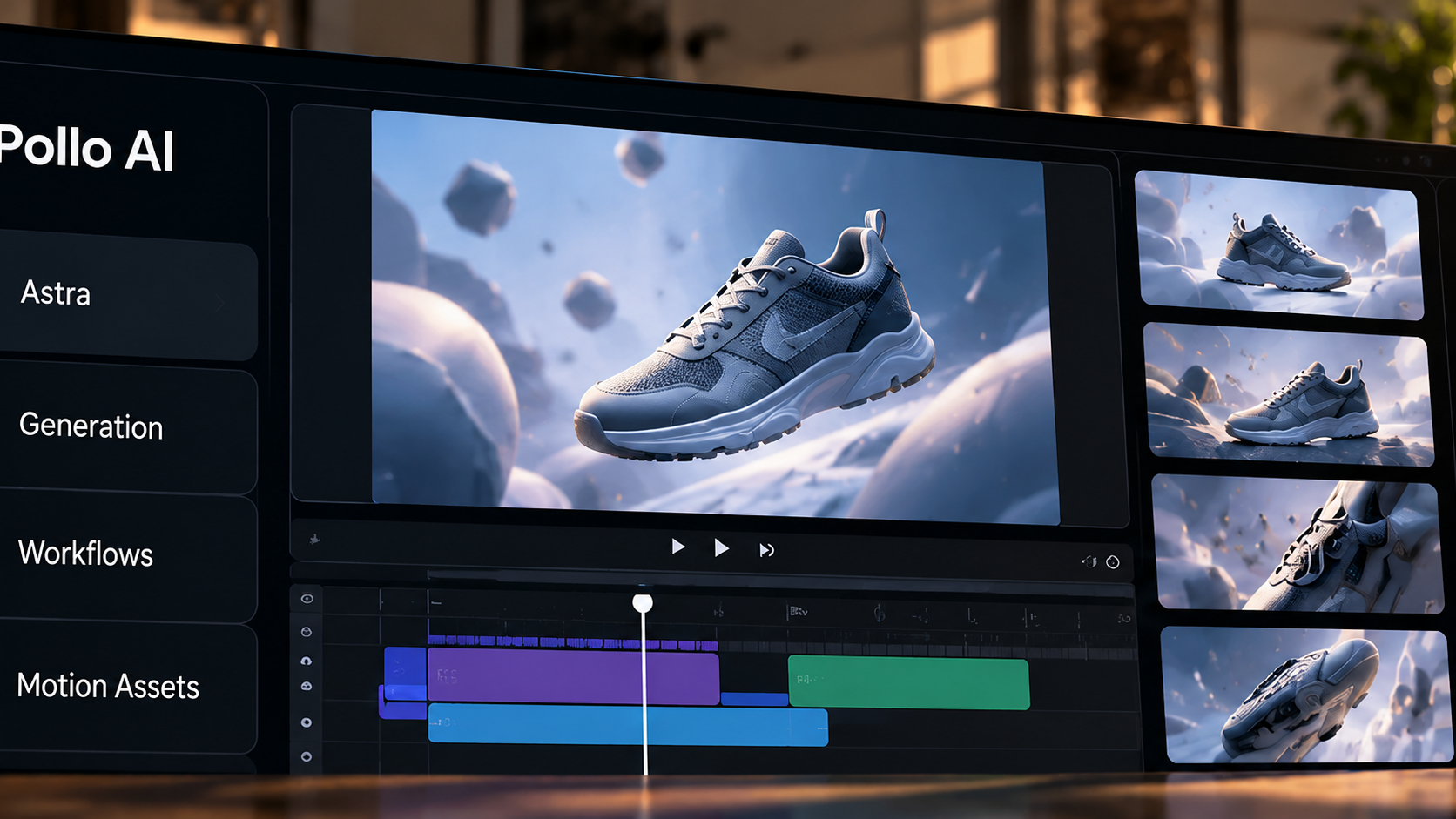
Pollo AI is using a mix of OpenAI models to turn rough creative ideas into images, storyboards and short video ads. According to OpenAI's latest case study, the platform uses GPT-5.6 for routing, GPT-6 Astra for more difficult narrative and revision work, and GPT-Image-2.5 for image generation.
The interesting part is the orchestration. Instead of forcing users to choose a model for every step, Pollo AI tries to decide which capability should handle the task and guides the user through the broader creative workflow.
Pollo Agent turns rough intent into a production plan
OpenAI says Pollo Agent interprets rough ideas and visual references, then helps develop storylines, scene flows and scripts. More difficult planning or revision work can be routed to GPT-6 Astra.
That makes the agent closer to a workflow coordinator than a single generation box, because it is responsible for turning an ambiguous idea into a sequence of creative decisions.
Different models handle different jobs
Pollo AI uses GPT-5.6 for routing and GPT-6 Astra for more challenging work. GPT-Image-2.5 is used for image generation, including posters, storyboards and campaign visuals.
This is a practical example of model routing: the system uses a faster capability where it is sufficient and reserves stronger reasoning for tasks that need it.
Users spend less time choosing models
OpenAI says Pollo AI reports that users spend more than 50 percent less time choosing or switching models after adopting this routing approach.
That matters because model menus can become their own form of complexity. A creative tool becomes easier to use when the system absorbs technical decisions that do not require artistic judgment.
Product photos can become short video ads
Pollo's Photo to Video Ads tool takes a still image plus a prompt and turns it into a short video aimed at social media campaigns.
OpenAI describes an example where a fragrance product photo became a roughly 15-second luxury-style ad with close-ups, lighting changes and textured visual treatment that would otherwise require a more involved production process.
Templates still matter even in generative workflows
OpenAI says 30 percent of Pollo AI creator sessions start from templates or trending-format workflows.
That suggests creators do not always want infinite possibility. A useful starting structure can be more valuable than a blank prompt because it reduces decision fatigue and gives the user a clearer path to an acceptable result.
What this says about creative AI products
The strongest products may not be the ones with the longest model list. They may be the ones that understand which model should handle each stage, preserve user intent across those stages and keep the experience coherent.
For creators, that means the competitive advantage shifts from access to generation toward workflow design: planning, routing, revision, consistency and the quality of the final handoff.
Sources and further reading
Read OpenAI's Pollo AI case study
Explore more articles on the Nejma Blog
GOT ANY QUESTIONS LEFT?
OpenAI says Pollo AI uses GPT-5.6 for routing, GPT-6 Astra for harder reasoning tasks and GPT-Image-2.5 for image generation.
It is Pollo AI's guided creative workflow that interprets rough ideas and visual references, then helps develop storylines, scene flows, scripts and revisions.
Yes. Its Photo to Video Ads tool uses a still image and prompt to create a short video for marketing and social-media use.





