OpenAI Dots Bring Always-On Agents to ChatGPT
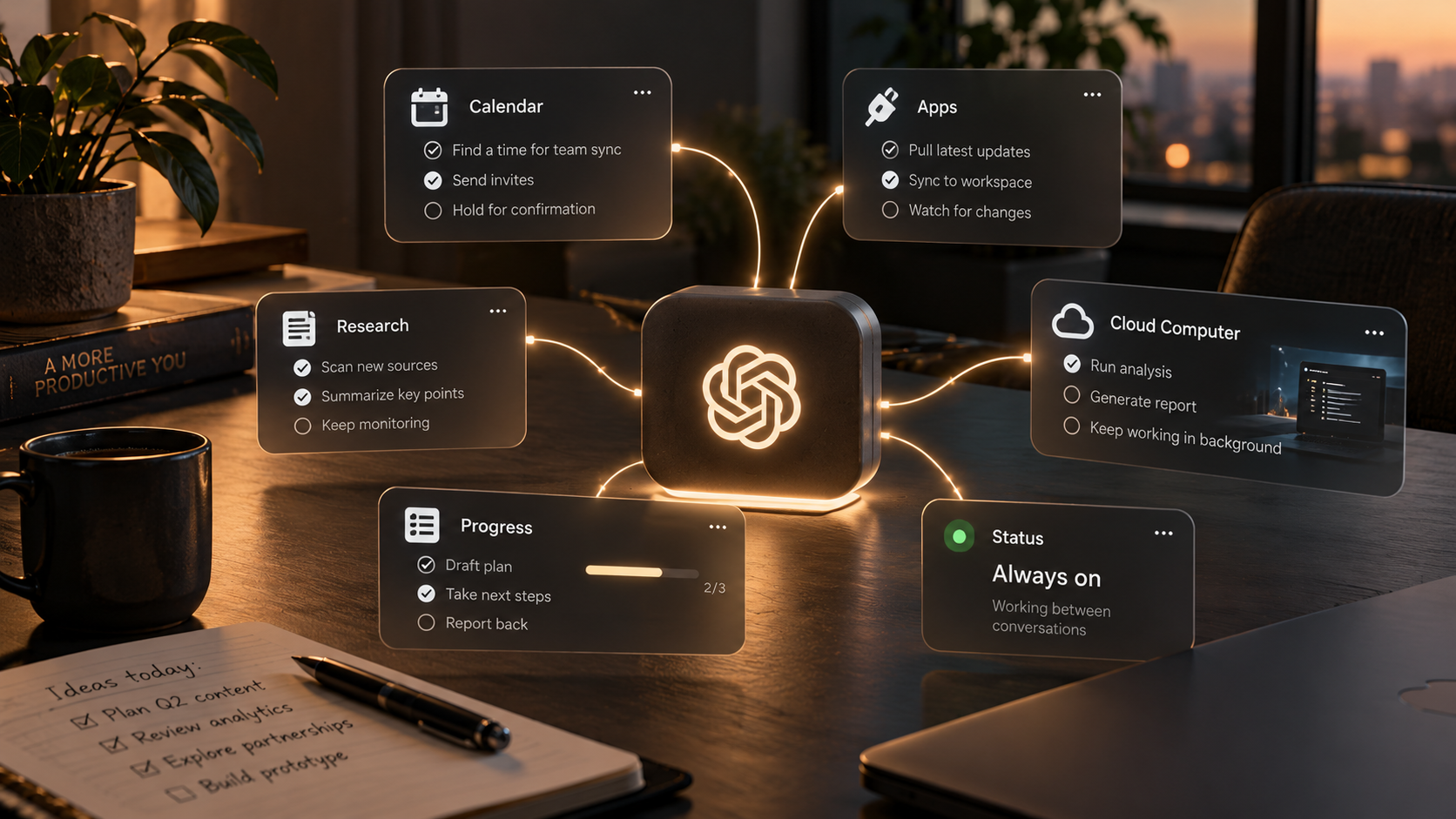
OpenAI has introduced Dots, a new class of always-on agents designed to keep working toward goals between conversations. Rather than waiting for a prompt and stopping after one answer, a Dot can use its own cloud computer, connect to external apps and continue making progress over time.
That changes the mental model of an AI assistant. A traditional chatbot is reactive: ask, answer, stop. An always-on agent is closer to delegated work, which raises both the potential value and the importance of clear boundaries.
What a Dot is
OpenAI describes Dots as persistent agents powered by GPT-6 Astra. They have their own cloud computer and can connect to thousands of apps through the plugin ecosystem.
Users can interact with a Dot through ChatGPT and supported workplace tools, give feedback, and define what the agent is allowed to do on its own.
Persistence changes the workflow
A one-off assistant has limited opportunity to understand long-running goals. A persistent agent can remember the objective, continue after the user leaves and bring back results later.
That is useful for monitoring, research, recurring preparation and administrative work where the main cost is the need to keep checking and following up.
Delegation needs explicit boundaries
The more autonomous a system becomes, the more important permissions and review become. Users need to know which apps the agent can access, which actions require confirmation and what it is allowed to do without asking.
A useful agent should reduce supervision without making accountability unclear.
Feedback becomes part of configuration
OpenAI says Dots learn from feedback over time. That can make an agent more useful because preferences do not have to be re-explained in every conversation.
But learned preferences should not become mysterious behavior. Teams will need ways to understand and update the instructions that shape how the agent works.
The plugin ecosystem makes agents more practical
An agent is limited if it cannot reach the systems where work actually happens. App connections allow it to gather information and take approved actions across the tools a person already uses.
The challenge is governance. Every extra connection expands the surface area for mistakes, permissions and sensitive data.
This is a different category from chat
The long-term significance of Dots is not that they answer better questions. It is that the product is moving toward ongoing delegated work.
That creates new possibilities for individuals and teams, but it also requires a stronger operational mindset: goals, permissions, checkpoints and clear definitions of success.
Sources and further reading
Read OpenAI's official Dots announcement
Explore more articles on the Nejma Blog
GOT ANY QUESTIONS LEFT?
A Dot is an always-on agent in ChatGPT that can use a cloud computer, connect to apps and continue working toward goals between conversations.
No. A Dot can keep making progress after the initial delegation within the permissions the user gives it.
Because the agent can access tools and act over time, so users need clear limits, review points and visibility.





