Meta Muse Logo Sparks Designer Backlash
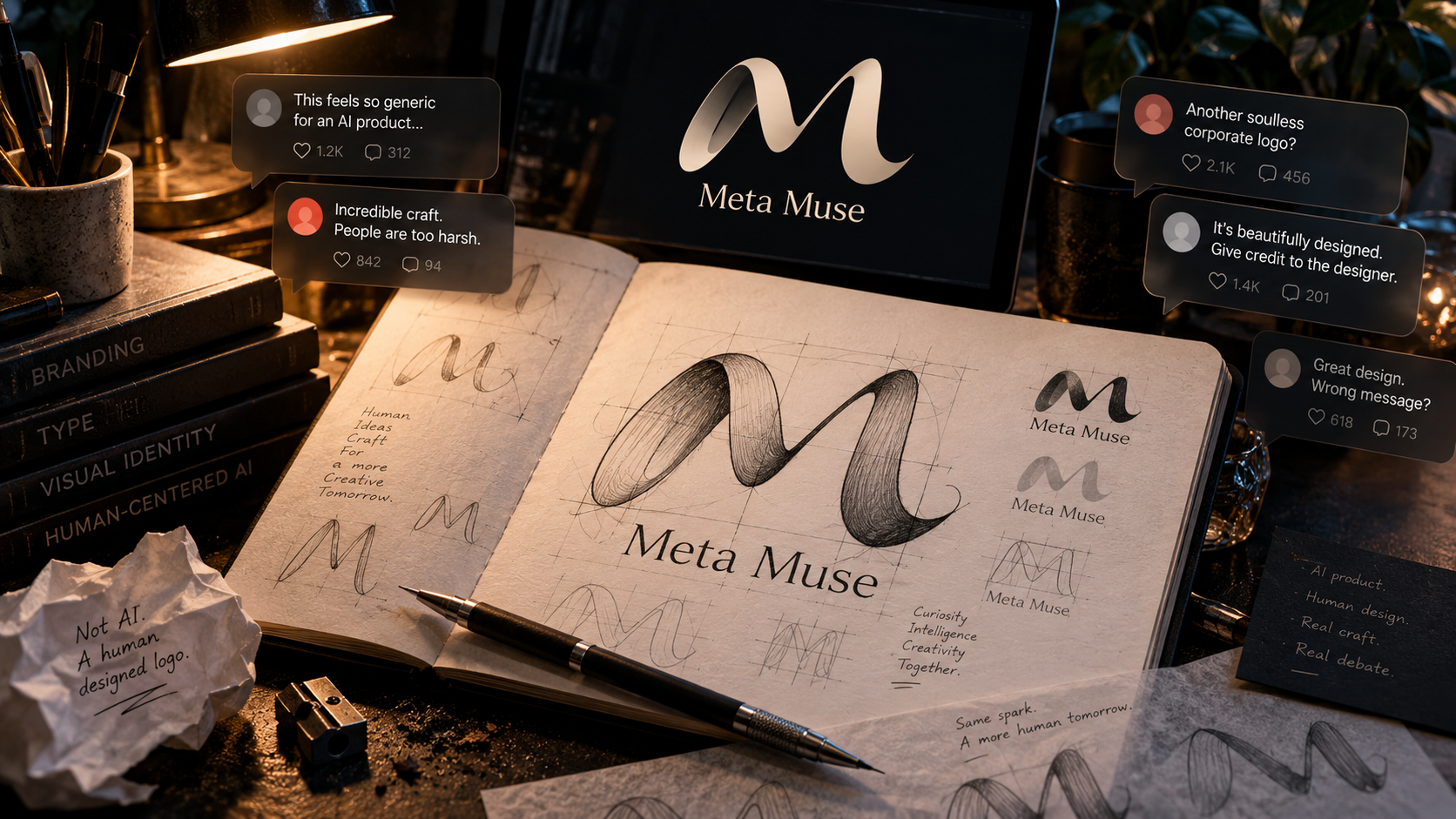
A hand-drawn logo for an AI assistant has become one of the design industry’s most heated stories this month. Lettering artist Jessica Hische created the icon and wordmark for Meta Muse, then faced a wave of criticism from fellow creatives over her decision to work for an AI company.
The reaction, detailed in an October 8 WIRED report and earlier local coverage, goes beyond whether people like the logo. It exposes a difficult question for independent designers: should accepting paid work from an AI company be viewed differently from other commercial branding assignments?
What happened with the Muse identity
Meta introduced Muse as an AI assistant and commissioned Hische, a lettering artist known for custom typography, to work on its visual identity. She created the M icon and accompanying logotype using traditional design methods.
After she shared the project publicly, some designers criticized the choice to work with Meta and an AI product. The discussion spread on social media and became a wider argument about the relationship between AI businesses and the artists whose livelihoods may be affected by automation.
The logo itself was human-made
One important fact is easy to miss in the debate: Hische said she did not use generative AI to create the logo. The project was a conventional commissioned design job for a company selling an AI product.
That distinction matters because criticism of AI-generated creative output and criticism of working for an AI company are different positions. They can overlap, but they should not be treated as interchangeable.
Why some designers objected
Critics argued that AI platforms can threaten the value of creative labor, particularly when models are trained on existing work or marketed as replacements for services that artists and designers provide. From that perspective, helping an AI company build a friendly visual identity can feel like supporting a business model they oppose.
Those concerns deserve serious discussion. Questions about consent, compensation, training data and how companies present automated creativity have not disappeared simply because a specific branding commission was performed by a person.
Why other creatives defended the commission
Other observers emphasized that freelance artists need paying clients and that a company commissioning human-made design is different from replacing that work with generated output. Hische described the financial pressures involved in running her small businesses and supporting staff.
The fact that a designer can be skeptical of aspects of AI while still accepting a branding project is not inherently contradictory. Professional decisions often involve tradeoffs among income, values, available clients and the scope of the actual work.
Criticism crossed into personal attacks
WIRED reported that the response went beyond disagreement about the commission, including personal insults and attention directed toward Hische’s private circumstances. That escalation matters independently of the underlying ethical debate.
A designer’s choice of client can be discussed or criticized without treating harassment as a legitimate professional consequence. The strongest arguments focus on business practices and creative labor, not attacks on an individual artist.
There was also a separate logo-similarity discussion
Earlier reporting noted comparisons between the Muse M and a mark used by Mural Arts Philadelphia. Hische discussed how she refined a client-provided direction, while Mural Arts Philadelphia said it did not intend to pursue legal action over the resemblance.
Similarity debates are common in identity design, especially with simple letterforms. They should be assessed separately from the ethical dispute about the client, and visual resemblance alone is not proof of copying.
What the controversy means for creative teams
The story shows that the reputational context of a design can matter as much as the craft behind it. Agencies and freelancers working with AI companies may face questions about how a product is built, whether artists are compensated and how the technology affects creative careers.
Clear project boundaries, transparent case studies and respectful disagreement can help. But no individual designer should be expected to resolve the entire industry’s conflict over AI through one client decision.
The broader branding lesson
A warm, human-made identity can help a technology company feel approachable, but it cannot settle deeper questions about trust. Audiences increasingly judge brands through their policies, products and labor practices as well as their logos.
For designers, the episode is a reminder that brand work exists within a social context. For companies, it is a reminder that commissioning human talent is meaningful but does not replace the need to address legitimate concerns about how AI changes creative work.
Sources and further reading
Read WIRED's October 8 report on Jessica Hische and Muse
Read the San Francisco Chronicle's earlier reporting
Explore more articles on the Nejma Blog
GOT ANY QUESTIONS LEFT?
Lettering artist Jessica Hische designed the icon and logotype for Meta Muse.
Hische said the identity work was human-made and did not use generative AI.
Some designers criticized accepting work from an AI company because of concerns about the effects of AI on creative labor.
No. Reporting describes broader ethical objections to the client relationship and separate discussion about the logo’s resemblance to another mark.





