GitHub Copilot Code Review Gets API Support
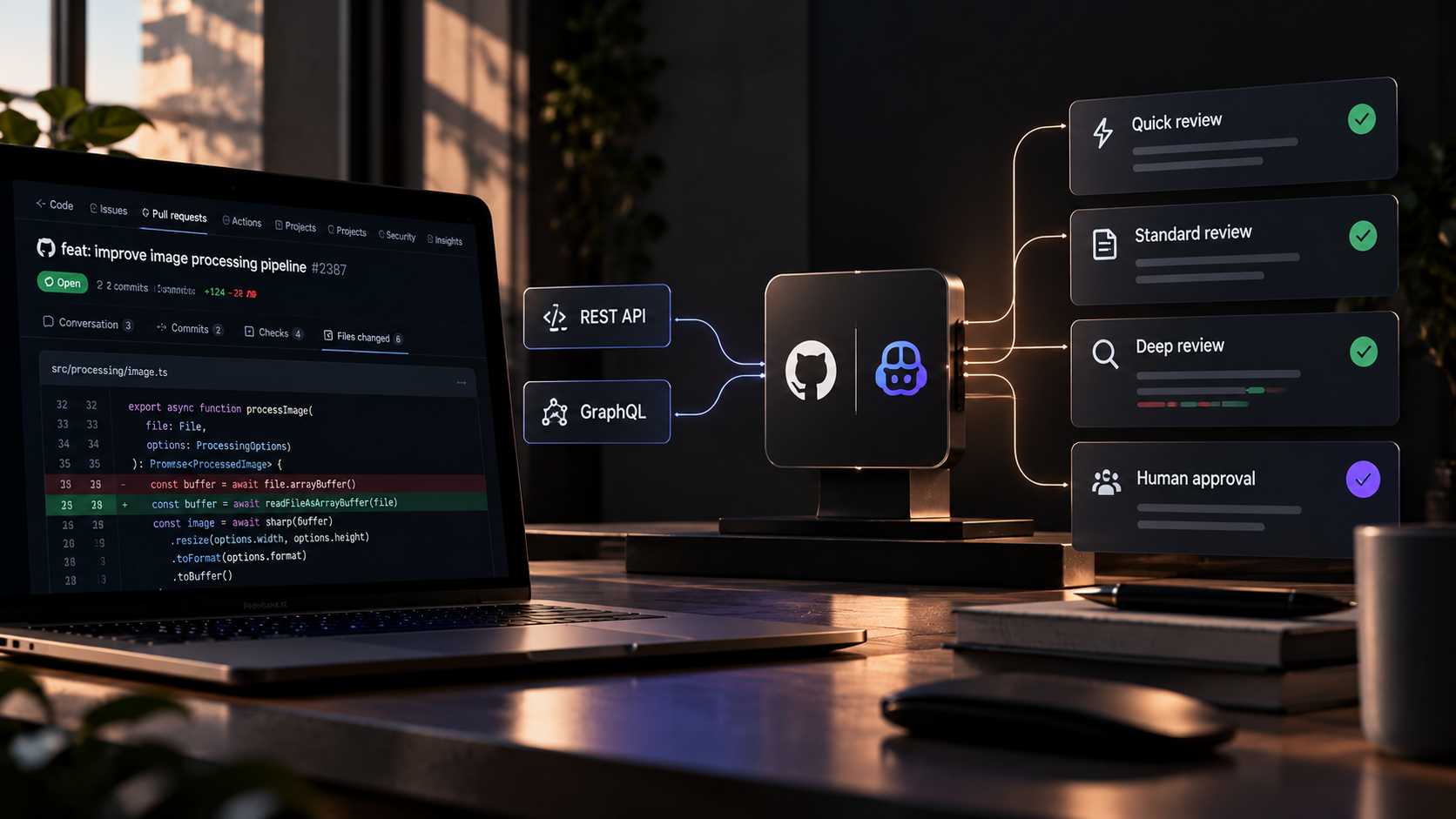
GitHub has expanded Copilot code review with API support, allowing teams to request reviews through REST and GraphQL instead of starting every review manually from the interface. The same request can also specify how much review effort Copilot should use.
This is a more important change than it first appears. Once a review system can be triggered from an API, it can become part of a larger engineering workflow: internal tools, pull-request automation, release checks, or custom approval systems can decide when an AI review should start.
What changed in Copilot code review
GitHub says supported REST and GraphQL APIs can now request a Copilot review. Teams can optionally set an effort level for each request, giving them a way to trade speed and depth depending on the situation.
GitHub also changed the default review effort to Balanced for repositories and organizations that had not explicitly selected Lite. That creates a more opinionated default while still allowing administrators and individual users to choose a lighter review mode.
Why API access matters
An interface feature is useful when a person remembers to use it. An API feature can become part of a repeatable system. A company can trigger review automatically when a pull request reaches a particular state, when files in sensitive areas change, or when an internal tool decides extra review is worthwhile.
That reduces dependence on individual habits. The process can become a property of the workflow instead of something every developer has to remember.
Different reviews need different effort
Not every pull request deserves the same depth. A tiny documentation fix and a large authentication refactor have different risk profiles. Exposing review effort makes it possible to align AI cost and attention with the type of change being reviewed.
The important part is to define those rules deliberately. If teams always request the maximum effort, they may spend more time and compute than the review actually justifies.
AI review should complement human ownership
Code review is not only about finding errors. It is also how teams share architectural context, enforce conventions, and take responsibility for changes. An automated reviewer can help with consistency, but it should not make ownership ambiguous.
The strongest setup is usually one where Copilot handles repetitive or broad checks while humans remain responsible for design decisions, product implications, security tradeoffs, and final approval.
Where this can fit in a real workflow
A team might trigger Copilot review after tests pass, before a human reviewer is assigned, or only on pull requests that touch certain directories. Internal tooling can also use the API to request review as part of a custom quality gate.
Because the API is programmable, the best use cases will likely be organization-specific. The point is not to automate every review; it is to put review effort where it has the highest value.
What teams should monitor
Teams should measure whether automated reviews surface useful issues, whether developers spend less time on repetitive comments, and whether the extra review creates noise. False positives can quickly make people ignore an otherwise useful system.
It is also worth reviewing permissions and logging. When an AI reviewer becomes part of an automated pipeline, teams need to know who can trigger it and what repositories it can access.
Sources and further reading
Read GitHub's official Copilot code review update
Explore more articles on the Nejma Blog
GOT ANY QUESTIONS LEFT?
Yes. GitHub says supported REST and GraphQL APIs can request Copilot code reviews.
Yes. Review requests can specify an effort level, and administrators can also configure defaults at several scopes.
No. It is better treated as an additional review layer while humans retain responsibility for architecture, risk and approval.





